When looking at skyscrapers towering high above the clouds, most people may imagine massive structures supported by thick concrete beams. However, behind the grandeur of modern architecture lies a construction secret that often goes unnoticed: the use of large-diameter hollow steel pipes as essential structural components in foundations and disaster-resistant building systems.
In the engineering industry, these materials are commonly known as Hollow Structural Sections (HSS). Rather than relying solely on solid metal components, engineers deliberately incorporate hollow steel sections into structural cores and underground foundation systems. But why are hollow steel pipes considered a reliable structural solution?
From a conventional perspective, solid objects are often assumed to be stronger than hollow ones. However, the principles of structural engineering tell a different story. When strong winds strike or earthquakes shake the ground, skyscrapers are subjected to torsional loads and significant forces acting from multiple directions.
Circular and rectangular hollow steel sections feature a uniform distribution of material along their outer perimeter. This geometric configuration provides excellent resistance to bending and torsional forces compared to conventional solid steel sections. In other words, hollow steel pipes enable buildings to maintain a degree of structural flexibility while preserving their strength and stability under demanding conditions.
One of the greatest challenges in constructing buildings exceeding 50 floors is managing the dead load, or the weight of the building itself. If the structural system and foundation are subjected to excessive loads, the building may experience settlement or structural failure. This is where hollow steel pipes offer significant advantages.
Hollow steel pipes can support substantial vertical loads, potentially reaching thousands of tons depending on their dimensions, material grade, and structural design, while weighing considerably less than equivalent solid steel components. This reduction in structural weight allows architects and engineers to design taller and more slender buildings while maintaining structural efficiency and safety.
As one of Indonesia's pioneering steel pipe manufacturers, with more than six decades of experience, PT Bakrie Pipe Industries (BPI) plays a strategic role in supplying structural steel pipe products for high-rise buildings and iconic national infrastructure projects.
BPI manufactures various specialized structural steel pipe products, including Rectangular Hollow Sections (RHS), Square Hollow Sections (SHS), and high-quality pipe piles.
BPI's structural and piling pipe products are manufactured to comply with various national and international standards, including ASTM A252 (Grades 1, 2, and 3), SNI 8052:2014, and JIS A5525.
By utilizing advanced manufacturing technologies, including High-Frequency Electric Resistance Welding (HF-ERW), Longitudinal Submerged Arc Welding (LSAW), and Helical Submerged Arc Welding (HSAW), BPI is capable of producing large-diameter steel pipes with high mechanical strength. These products provide reliable support for major structural loads in underground foundations and building frame systems.
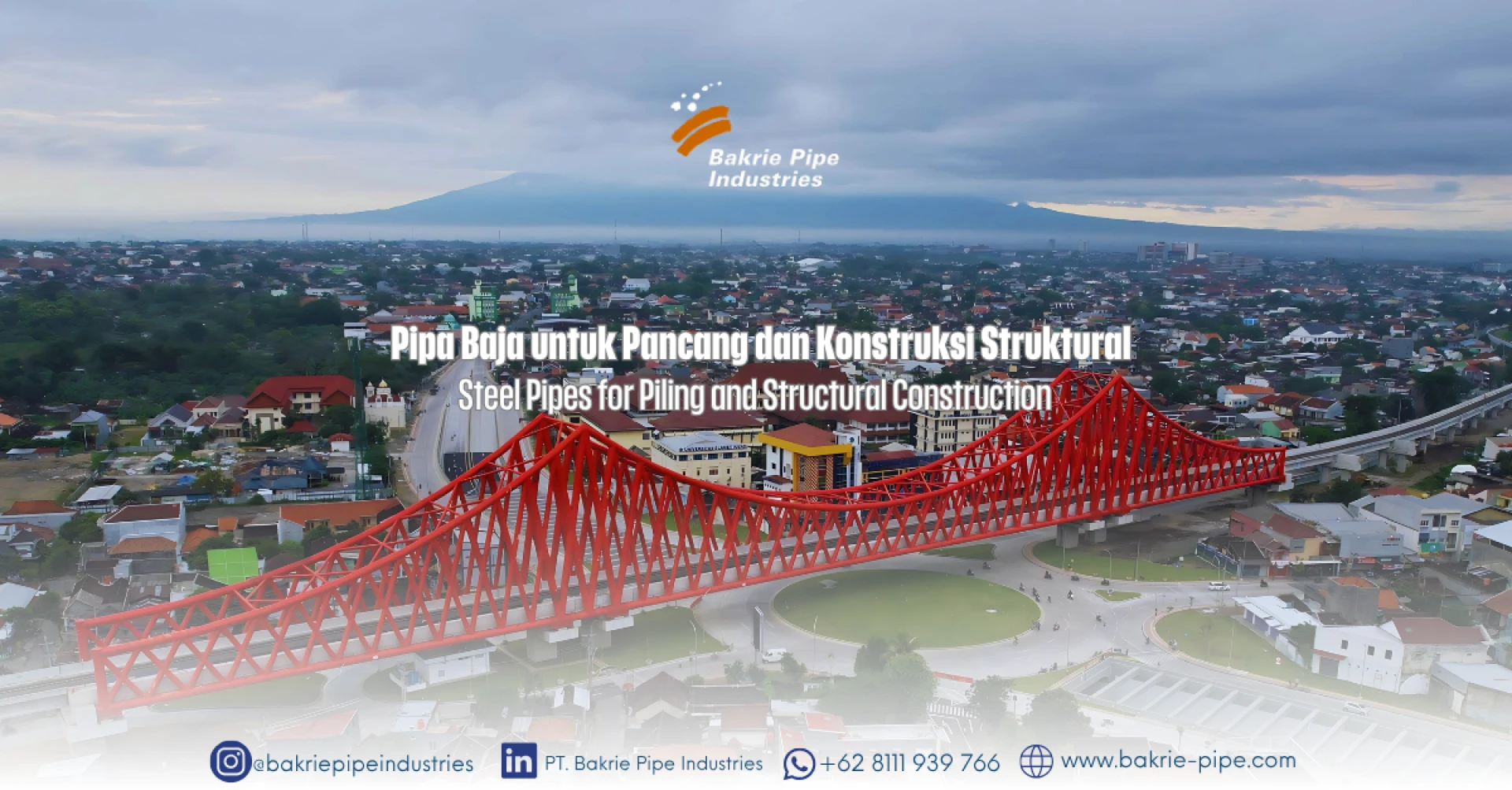
BPI's commitment to quality is reflected in its track record of supplying materials for major infrastructure developments, including Terminal 3 of Soekarno-Hatta International Airport and the elevated structure of the Jakarta LRT Velodrome line.
Beyond serving as structural components that help buildings withstand seismic forces, steel pipes also play an essential role in everyday building utilities.
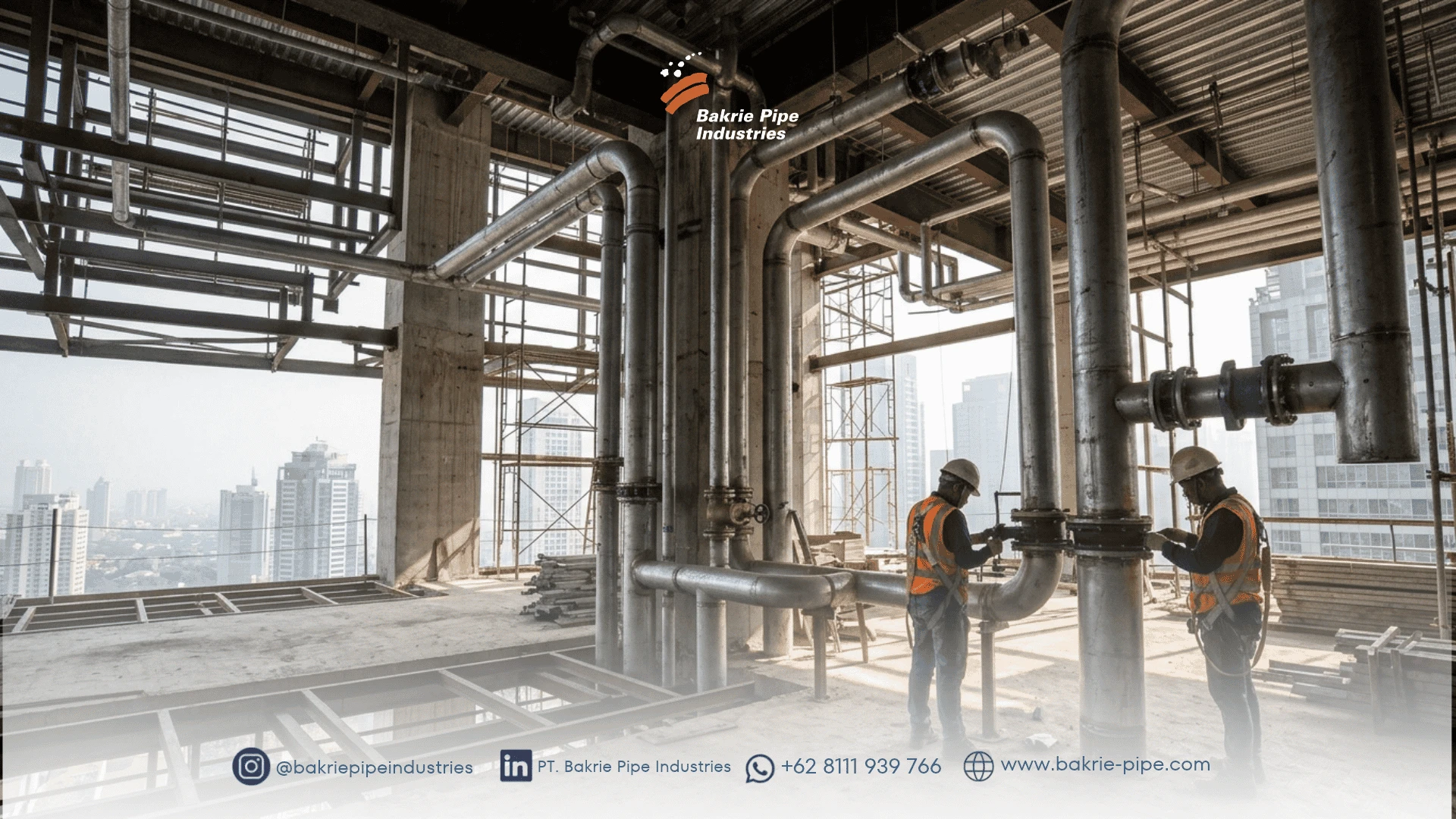
The internal spaces within skyscrapers accommodate extensive steel piping networks used to distribute clean water to hundreds of meters above ground level, transport gas, and support centralized air conditioning (HVAC) systems.
Equally important, specialized black steel and galvanized steel pipes serve as critical components in automatic sprinkler systems and building fire hydrant networks. These applications have also been implemented in modern commercial facilities, including AEON Mall Sentul.
When fire sensors detect elevated temperatures, these high-pressure steel piping systems deliver water to suppress the fire at its source before it spreads. This helps protect the building's structural integrity while safeguarding the lives of thousands of occupants.
Steel pipes are no longer merely conventional components used for water distribution. In today's modern construction industry, they have evolved into advanced structural elements that work behind the scenes to support the safety and functionality of buildings.
Through high-quality material innovation and engineering expertise from domestic manufacturers such as Bakrie Pipe Industries, the vision of developing vertical cities and skyscrapers capable of withstanding various structural challenges and natural disasters can become a reality in Indonesia.
Behind every towering structure lies an essential foundation of strength, reliability, and engineering excellence.