Hello Pipe Enthusiasts!
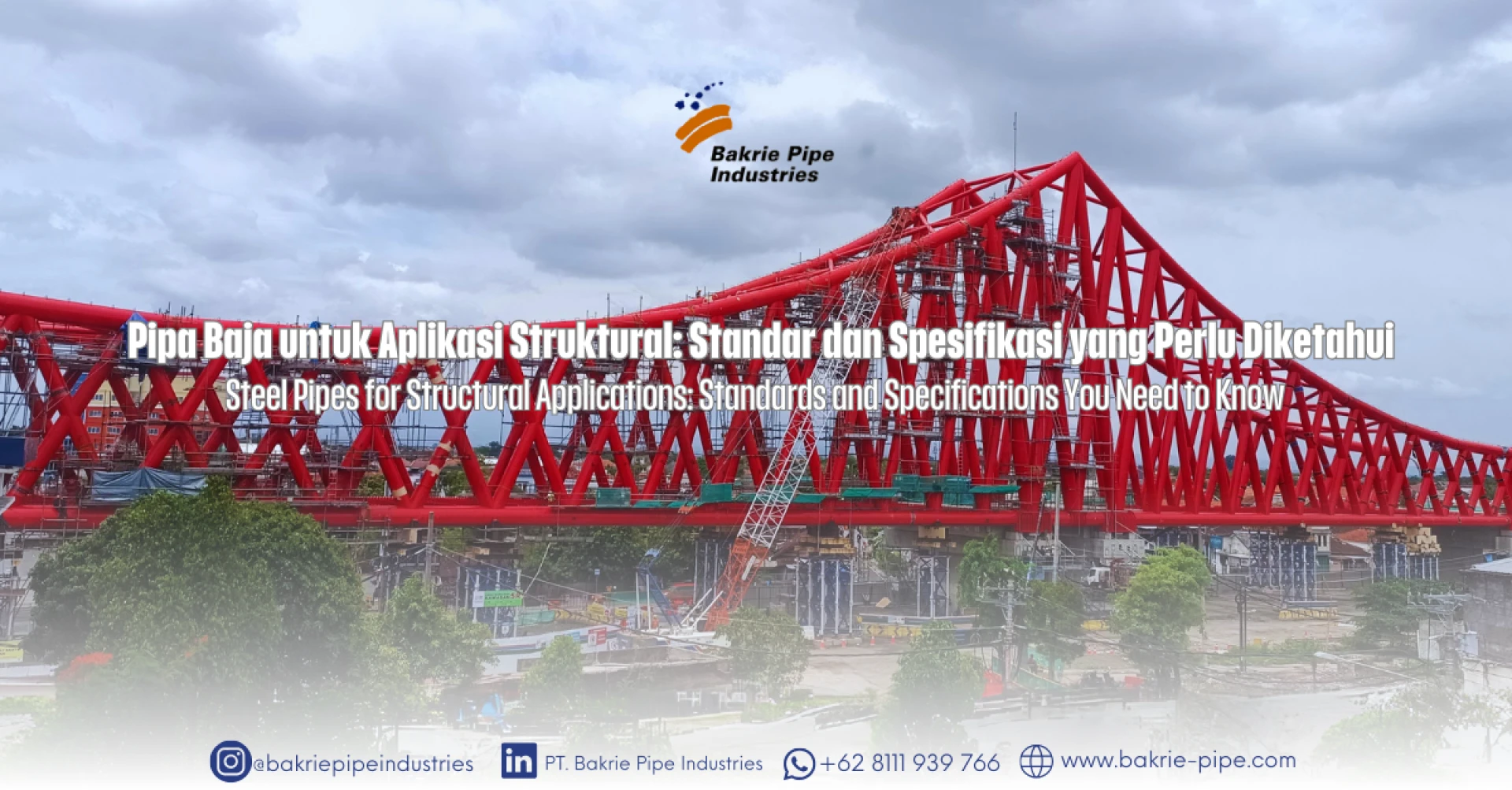
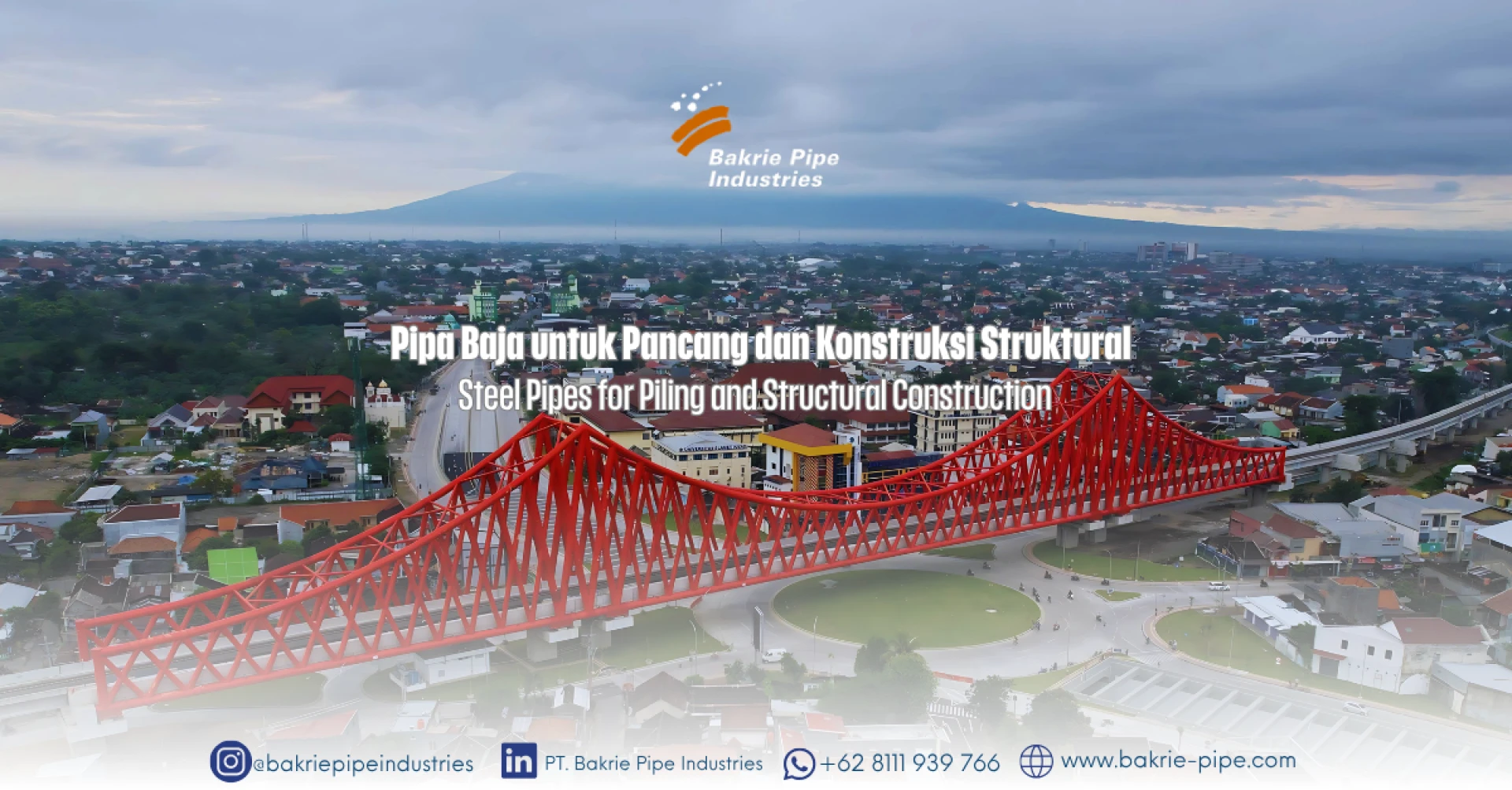
Steel pipes are not only used in the oil and gas sector or energy distribution, but they also play a vital role in structural applications. From piling foundations, bridge supports, dock foundations, building frameworks, street lighting poles, telecommunication towers, power line poles, to fire hydrant systems, structural steel pipes form the backbone of infrastructure development. To support these diverse applications, let’s explore the standards and specifications that guide the industry.
SNI 0068:2013
SNI 0068:2013 is the Indonesian standard for general construction steel pipes. Pipes manufactured under this standard are used for light to medium structural applications such as building frameworks, street lighting poles, telecommunication towers, and power line poles. The focus is on dimensions, tolerances, and mechanical properties sufficient for general construction.
Steel pipes under SNI 0068:2013 are available in three welding methods: ERW (Electric Resistance Welding), LSAW (Longitudinal Submerged Arc Welding), and HSAW (Helical Submerged Arc Welding). They come in two shapes, round and square. For round pipes, the outside diameter ranges from 21,7 mm (½ inch) to 1.016 mm (40 inch), with wall thickness from 2,0 mm to 22,0 mm.
These products are widely used in civil and architectural projects, steel towers, scaffolding, and public infrastructure requiring high quality steel pipes.
SNI 8052:2014
SNI 8052:2014 is more specific, covering steel pipe piles (piling). This standard ensures that steel pipes have sufficient compressive strength and deformation resistance for heavy-duty foundations such as bridges, docks, and other major infrastructure projects.
Steel pipes under SNI 8052:2014 are also available in ERW, LSAW, and HSAW welding methods. The outside diameter ranges from 60,3 mm (2 inch) to 1.625,6 mm (64 inch), with wall thickness varying according to diameter, typically from 3,9 mm to 25,0 mm.
Applications include high rise building foundations, bridges, docks, transportation infrastructure, and port construction.
ASTM A252
ASTM A252 is an international standard for steel piling pipes. Widely used for piling, bridge foundations, docks, and heavy construction projects, this standard specifies requirements for compressive strength, deformation resistance, and controlled chemical composition (C, Mn, P, S).
Welding methods include ERW, LSAW, and HSAW. The outside diameter ranges from 60,3 mm (2 inch) to 3.556,0 mm (140 inch), with wall thickness typically between 2,7 mm and 25,4 mm. Applications include bridge foundations, docks, ports, and heavy infrastructure projects.
JIS G3444
JIS G3444 is a Japanese standard for carbon steel pipes used in civil engineering and architecture, such as steel towers, scaffolding, foundation piles, building foundations, and landslide prevention piles. This standard emphasizes dimensional consistency and mechanical properties to ensure safe use in structural applications. Welding methods include ERW, LSAW, and HSAW. The outside diameter ranges from 21,7 mm (½ inch) to 1.016,0 mm (40 inch), with wall thickness from 2,0 mm to 22,0 mm. Applications include building frameworks, bridges, scaffolding, and general structural projects.
JIS A5525
JIS A5525 is the Japanese standard for welded steel pipe piles. These pipes are used as structural foundations, especially in civil engineering and architecture. Piles for landslide prevention are also included in its scope. The standard ensures high compressive strength, deformation resistance, and durability against soil and water environments. Welding methods include ERW, LSAW, and HSAW. The outside diameter ranges from 318,5 mm (12 inch) to 2.000 mm (80 inch), with wall thickness from 6,9 mm to 25,0 mm. Applications include dock foundations, bridges, ports, landslide prevention, and other heavy construction projects.
Conclusion
Understanding steel pipe standards is crucial in planning construction projects. By referring to SNI 0068:2013, SNI 8052:2014, ASTM A252, JIS G3444, and JIS A5525, infrastructure projects can be built safely and reliably.
Bakrie Pipe Industries is ready to support your structural steel pipe needs according to both national and international standards, driving Indonesia’s infrastructure development across sectors. If you require structural steel pipes for your project, contact our Sales & Marketing team, our expert engineers are here to assist you. See you again in the next #BPIPipeInsights! article!