Hello Pipe Enthusiasts!
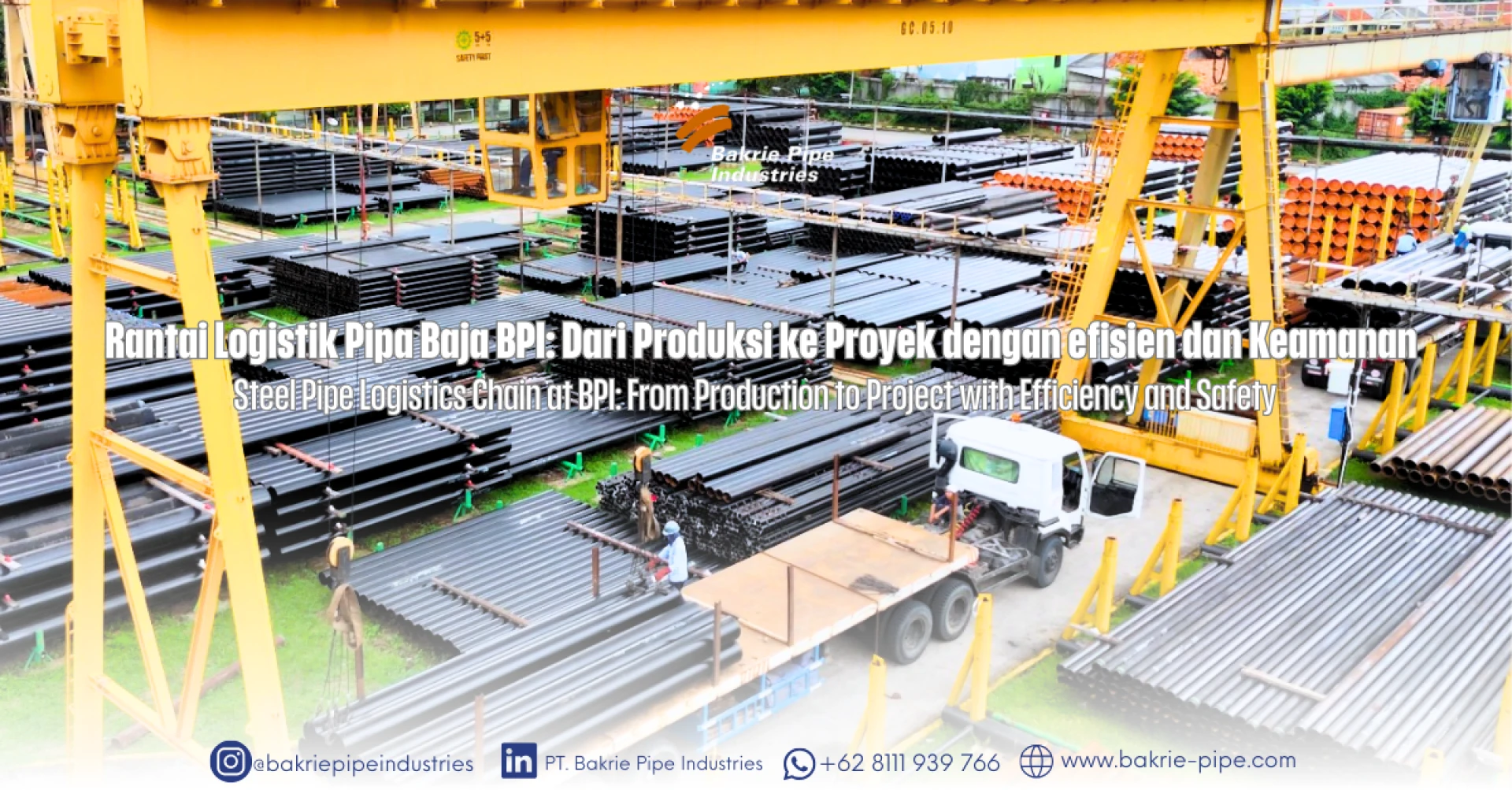
In this edition of #BPIPipeInsights!, we will discuss how Bakrie Pipe Industries (BPI) manages the steel pipe logistics system efficiently and safely, from internal processes to delivery at project sites, including the equipment used and the stages of transportation.
Internal Steel Pipe Transportation Equipment
There are several transportation tools used by BPI in transporting steel pipes, including:
1. Conveyor System
Used to automatically transfer steel pipes from one process to the next. This system is effective in finishing, coating, and inspection areas because pipes move continuously without manual lifting, reducing the risk of damage and increasing time efficiency.
2. Forklift
Suitable for moving small to medium diameter pipes in warehouse and loading dock areas. Forklifts are known for speed and flexibility in truck loading/unloading and stock arrangement, with excellent maneuverability in limited spaces.
3. Overhead Crane & Gantry Crane
Used to lift large quantities of pipes from production to storage.
- Overhead crane → moves along rails inside the production hall.
- Gantry crane → operates in open areas, capable of lifting heavy loads with stability.
4. Mobile Crane
A flexible version of the crane that can move between locations. It is used for special needs, such as transferring pipes to inspection areas or internal projects in locations not accessible by other equipment.
Steel Pipe Transportation Stages
The following are the stages in transporting steel pipes, among others:
1. Internal Handling: Production to Warehouse
- Steel pipes completed in production are immediately transferred to storage areas using gantry cranes, overhead cranes, and forklifts.
- All equipment is operated by certified personnel (SIO) and supervised by the HSE team.
- Stock arrangement is based on diameter, length, and pipe type to facilitate loading.
2. Area Transfer: Mobile Crane & Internal Trailer
- For special needs such as inspection or transfer between zones to the next production stage, BPI uses mobile cranes and internal trailers.
- This process follows established operational routes to avoid disrupting production activities.
3. External Distribution: Delivery to Project Sites
- Steel pipes are delivered using trucks and trailers that have undergone technical inspections and meet both internal standards and customer requirements.
- Load securing is carried out with industry-standard safety systems.
- Each shipment is accompanied by complete logistics documents and delivery schedules integrated with the sales and project teams.
Operational Standards & Compliance
All steel pipe transportation processes at BPI comply with:
- ISO 45001:2018 → occupational safety
- ISO 14001:2015 → environmental management
- BPI HSE documents & Ministry of Manpower regulations → technical and legal procedures
- Operators are required to use complete PPE, hold a Surat Izin Operator (SIO – Operator License), and all equipment undergoes regular maintenance.
Efficiency & Safety: Top Priority
With a structured logistics system, BPI ensures:
- Zero incidents in pipe handling.
- Measurable delivery lead times.
- Transparency and accuracy in product tracking.
- This supports customer projects to run on time and according to specifications.
Conclusion
Steel pipe transportation is not just a handling process, but part of the value chain that determines BPI’s service quality. With modern equipment, strict K3L procedures, and an integrated logistics system, BPI is ready to deliver steel pipes from factory to project with precision, safety, and efficiency.
If you require steel pipes with ERW/HFW, LSAW, or HSAW welding methods, trust Bakrie Pipe Industries for your needs.